Too Clever by Half

Case studies / Client work

U.S. Bank Design Day: prompting for design moments

A panel and a hands-on workshop for 300+ designers, writers, directors and product leaders, with AI prompting tied to the moments where design decisions actually happen.

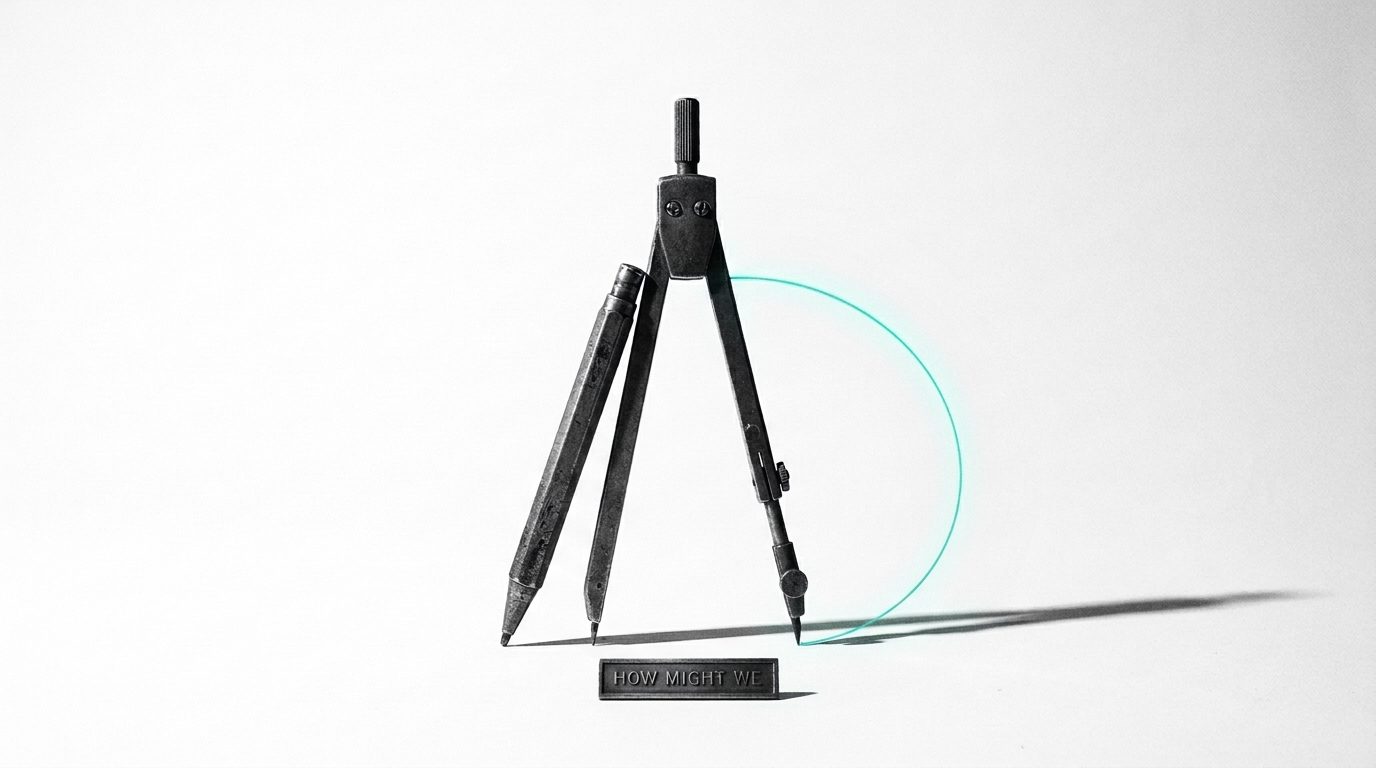
A drafting compass drawing an arc, a worn pencil leaning against it, and a small plaque reading "How might we".
Proves
AI literacy lands when you teach it inside the work people already do, not as a separate skill.
Client
U.S. Bank, Experience Design
Format
Panel conversation + hands-on workshop
Room
300+ designers, writers, directors and product leaders
Where
Design Day, Minneapolis

Read

The brief

Caleb Schmidt, who leads Experience Design at U.S. Bank, invited me to the organisation’s Design Day to help raise his teams’ prompting game. The brief wasn’t a tour of AI tools. It was prompting taught against real design work.

What we did

There were two parts. First, a panel conversation with Amy Heymans about where AI fits in a design practice. Then a hands-on prompting workshop for more than 300 designers, writers, directors and product leaders.

The workshop skipped generic examples and was built around design moments, the points in a project where a designer has to make a call:

  • crafting a design hypothesis you can actually test
  • writing “How Might We” statements that open a problem up instead of closing it down
  • running a bias check on personas, journeys and content
  • pushing past the first idea with creative iteration

People prompted on their own work, compared results across tables, and argued about which outputs were actually good. The arguing is the point. It’s how a team builds judgement about AI instead of just usage.

What it felt like

When I’m asked to speak or run workshops, I often fly in, shake a few hands, do my thing and fly out. Design Day was different. There was a real effort to engage and communicate, to probe and explore. You could feel it in the room.

It was a big reminder that artificial intelligence is powered by real, live human beings, and that human-centred design is what keeps it meaningful.

What still needs a human hand

Every prompt in the kit below gives you options, not answers. Picking the right hypothesis, the right HMW, or the right variation is still a design decision, and that’s the job.
Use it

Try it yourself

The workshop was built around four design moments. Here's one prompt for each. Use them on a live project, with the real brief.

Time: 15 minutes per prompt

Prompt 01

Design hypothesis

Use it when a project has a solution in mind but no testable claim.

Help me turn a design idea into a testable hypothesis.

The idea: [describe it]
The users: [who they are, in one line]
The evidence we have so far: [research, data, complaints]

Write three hypotheses in this form:
"We believe [change] for [users] will result in [outcome].
We'll know we're right when we see [measurable signal]."

For each one, name the riskiest assumption inside it, and the
cheapest way to test that assumption this week.
Prompt 02

How Might We, without the mush

Use it when a workshop wall is full of HMWs that are too broad or too narrow.

Here is a problem statement from our research: [paste it]

Write 10 "How might we…" questions. Make 3 too broad, 3 too narrow,
and 4 just right, and label which is which. For each "just right" one,
explain in one line why it leaves room for more than one solution.
Then ask me which one I'd take into ideation, and why.
Prompt 03

Bias check

Use it before a persona, journey map or piece of content goes to stakeholders.

Review the artifact below for bias. Look for:
- who is assumed to be the "default" user, and who is missing
- language that assumes ability, income, age, gender, culture or tech comfort
- places where our data may not represent the people affected

For each issue, quote the exact phrase, explain who could be harmed or left out,
and suggest a fix. Tell me what you can't judge from the text alone,
so I know which questions to take to real people.

ARTIFACT:
[paste it]
Prompt 04

Creative iteration

Use it when the first idea arrived too fast and everyone likes it.

Our current idea is: [describe it]

Give me five deliberate variations:
1. The opposite approach
2. The version for our most frustrated user
3. The version with half the screens or steps
4. The version a competitor would never ship
5. The version that would embarrass us in a good way

For each, one line on what it would teach us even if we don't build it.

Want this run properly, with your team and your real work?

Talk to me about it

More case studies

Client work

SuperPosition: AI that makes you harder to replace

A Chief Operating System for one leader: plain files on their own laptop that learn how they think, lay more perspectives over their own, and hand every decision back. It works with the people around them, and replaces none of them.

Proves AI can carry real leadership context safely when it adds to a person's judgement and never stands in for it.

Client work

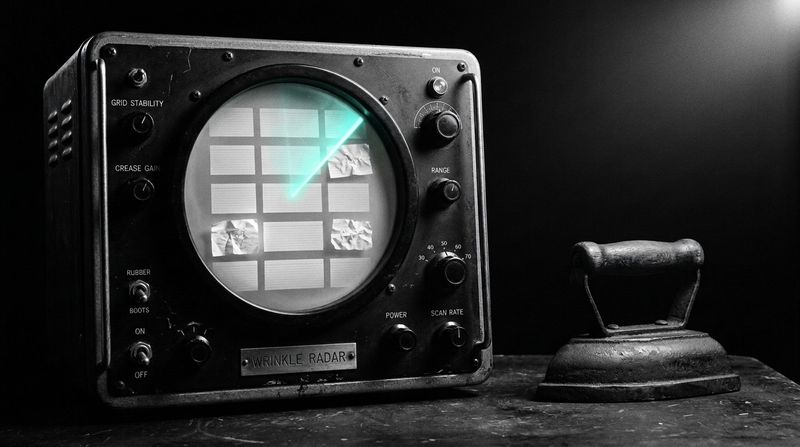
The wrinkle radar: consistent numbers through a transformation

A large US retailer outsourced a whole product team, and the numbers still had to add up. I connected Claude to Jira to catch bad board hygiene, teach the fix, and keep leadership's comparisons fair for a year of constant change.

Proves AI can hold a standard steady while everything around it changes, when a person decides what the standard is.